
Our Gold Coast Divorce Lawyers will help you finalise your divorce and related matters smoothly and cost-effectively, offering clear advice and affordable legal representation when required. Book a free 15 minute consultation today to find out how we can help.
Call 1300 876 596
At Advance Family Law, we’ve been helping Gold Coast families manage the legal aspects of divorce since 2012. With over 40 years of combined exclusive family law experience, you’ll be led by Directors Sonya Black and QLS Accredited Family Law Specialist Joshua Peters. We’ll help you through the administrative steps involved with filing for divorce, and provide clear advice on related parenting and property matters, which are resolved using separate legal processes.
Working with us, you’ll have complete support from highly experienced divorce lawyers, ensuring you can make informed legal decisions. Get in touch to book a free 15 minute consultation to find out how we can help.
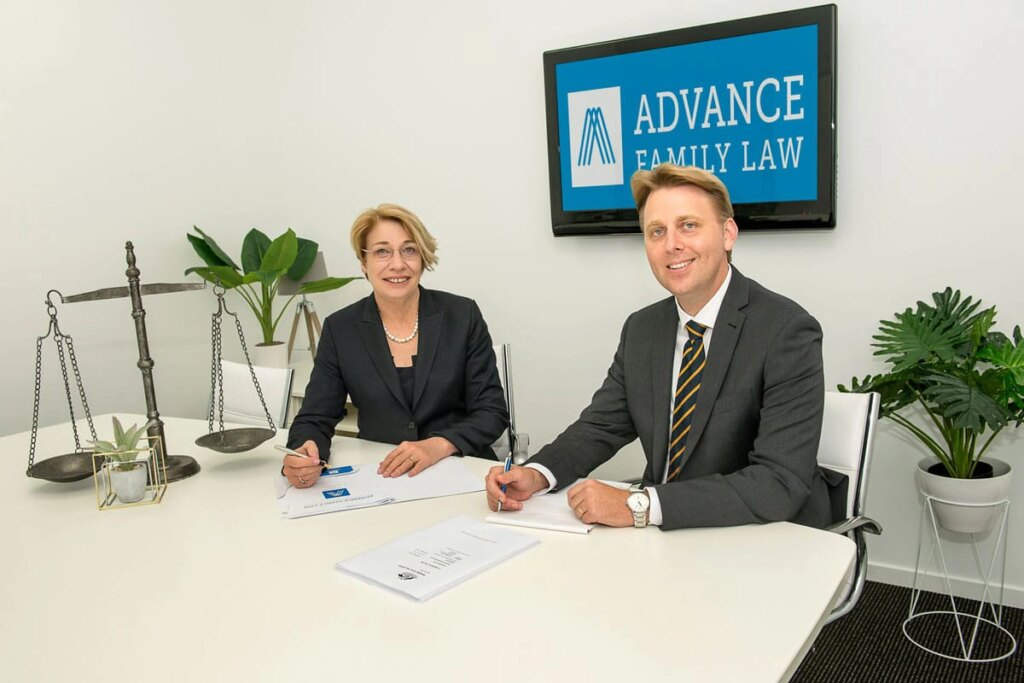

Ending a marriage or de facto relationship can be emotional and often comes with a lot of paperwork and legal considerations. Whether you’re dealing with a simple divorce, property settlements, parenting matters or domestic violence, our highly experienced team is here to help you understand the way forward.
"In my experience, clients going through divorce often worry most about the unknown, how long it will take, and what the outcome might look like. Being upfront early about realistic timeframes and likely next steps tends to ease a lot of that anxiety, even before the matter is resolved."
Joshua Peters

Divorce can be confusing, and our team is here to remove unnecessary stress and ensure you understand the required legal steps, your options, rights and responsibilities.
In Australia, divorce is based on a ‘no fault’ principle. This means that neither person has to take blame for the relationship breaking down, or to prove why the relationship has to come to an end. The only thing that needs to be clear is that an irretrievable breakdown of the marriage has occurred, which is demonstrated by 12 months of separation – which can be while living apart, or still living together. If you have separated under one roof, you’ll need to provide the court with an affidavit to support your divorce application, explaining how the relationship has changed.
It’s important to be aware that divorce is only one part of ending a significant relationship, and it doesn’t automatically address care of children and asset division – you’ll need to organise these too. There is no time limit for getting a divorce – but there is a 12 month time limit for property settlement claims that begins as soon as your divorce order takes effect, outlined in section 44(3) of the Family Law Act 1975 (Cth). Have questions? Get in touch with our Gold Coast divorce lawyers today.
In Australia, divorce applications are made with the help of a divorce lawyer, or directly through an online application via the CommCourts portal, after a period of 12 months or more of separation from your spouse. This shows that there has been an irretrievable breakdown of the marriage, which is a requirement for divorce under section 48 of the Family Law Act 1975 (Cth). When you apply for a divorce, you can choose either a sole (on your own) or joint (with your spouse) application. If you decide to make a sole application, you’ll need to make sure that your spouse is served with a copy of the application, at least 28 days before the hearing if they are in Australia, or 42 days if they are overseas. If you are unable to do so because they cannot be located or refuse service, you may need to apply to the court for a substituted service.
In most cases, a divorce takes around 3-4 months to finalise after an application is made. A hearing is usually set 4-8 weeks after your application is received, depending on the backlog of the court. Your divorce becomes ‘official’ one month and one day after the hearing takes place, ending your legal status as married. If you’ve got children under 18, you’ll need to make sure there are suitable arrangements in place for their care as part of your application, to meet the requirements of section 55A of the Act.
The majority of divorce hearings do not require either party to attend court, and are instead conducted via video conference or over the phone. There are some instances in which you will need to attend, including when the Applicant or Respondent wishes to attend, when the Respondent opposes the application or there have been issues with service. If you have been separated under one roof, you may also need to attend to clarify separation arrangements.
We offer a free 15-minute consultation to help you understand your responsibilities and options moving forward.
"Going through a divorce is rarely easy, and our role is to make the legal process as clear and manageable as possible, so you can focus on moving forward with confidence. We aim to reduce the stress wherever we can, while still protecting your interests. "
Joshua Peters
Step 1
Contact us today to schedule a free 15-minute telephone consultation. During this call, we’ll discuss your situation and outline your options for moving forward.
Step 2
Our Gold Coast lawyers will ensure you clearly understand the divorce process and requirements, empowering you to make informed decisions about your future.
Step 3
With our guidance and support, you can confidently work through your divorce and focus on moving forward with your life.
EXCELLENT Based on 53 reviews
 Posted on Google
 Anthony
Trustindex verifies that the original source of the review is Google.
SONYA and her team helped me during a nasty seperation and they were sensational. The effort Sonya does for her cases is sensational,without losing the human factor. I would highly recommend this team to help them in any legal situation. Thank you Sonya Regards TonyPosted on Google serryndimityI want to thank Joshua for the support and guidance provided during one of the most difficult times in our lives. My daughter was going through significant emotional trauma, and from our very first meeting, it was clear he was not just knowledgeable, but also very compassionate. What stood out most was Joshua’s gentle and patient approach. He took the time to truly listen, to understand our unique situation, and to explain each step of the legal process with clarity and empathy. His legal expertise was evident throughout. We never felt rushed or dismissed; instead, felt supported. I recommend Joshua. I’m incredibly grateful for the way helped us move forward with dignity, compassion, and confidence.Posted on Google
 Behrouz ZadeganA family member was in need of legal assistance so we contacted Advanced family law and had a very smooth ride with their help through the difficult time. We appreciated how Joshua managed our case and we would recommend this firm 100%. Thank you Advanced family lawPosted on Google
 Cherie DonaldsonJosh was a calm and steady presence during a tumultuous time. I always felt I could rely on him, not only for his legal expertise but also for his thoughtful, measured approach. He knew my case thoroughly and consistently provided sound advice, balancing cost-effective with the best possible outcome. If you're looking for a genuinely decent human to have in your corner, I wouldn't hesitate to recommend Josh.Posted on Google
 E J AngusIf you are looking for the best family lawyer I can highly recommend Sonya and her team. When I had questions advance family lawyers had the answer.Posted on Google
 Scott BoydOver the past couple years I’ve had Sonya represent me, her whole team was great to talk to and deal with. Sonya was very understanding and showed an in-depth knowledge of every outcome. I wanted to find the best lawyer in the family law field and she delivered.Posted on Google
 LiamRyan semlerSonya was incredibly helpful. and so fast to attenuate my situation. Highly recommend 11/10 Thank you! ☺️




Admitted as a solicitor in 2007, Joshua Peters has more than 19 years’ experience in family law. He is a Queensland Law Society Accredited Family Law Specialist and collaboratively trained, with expertise in complex property settlements, parenting, child support, domestic violence and family law litigation.

Admitted as a solicitor in 2004, Sonya Black has more than 22 years’ experience in family law. She holds a Master of Laws and is collaboratively trained, with a practice focused on complex parenting, property and financial matters, including companies and self-managed superannuation funds.

Admitted as a solicitor in 2022, Lauren Baptiste has more than four years’ experience in legal practice, with a focus on family law. She advises on parenting arrangements, property settlements, divorce and domestic violence matters, with additional experience in Wills and Deceased Estates.
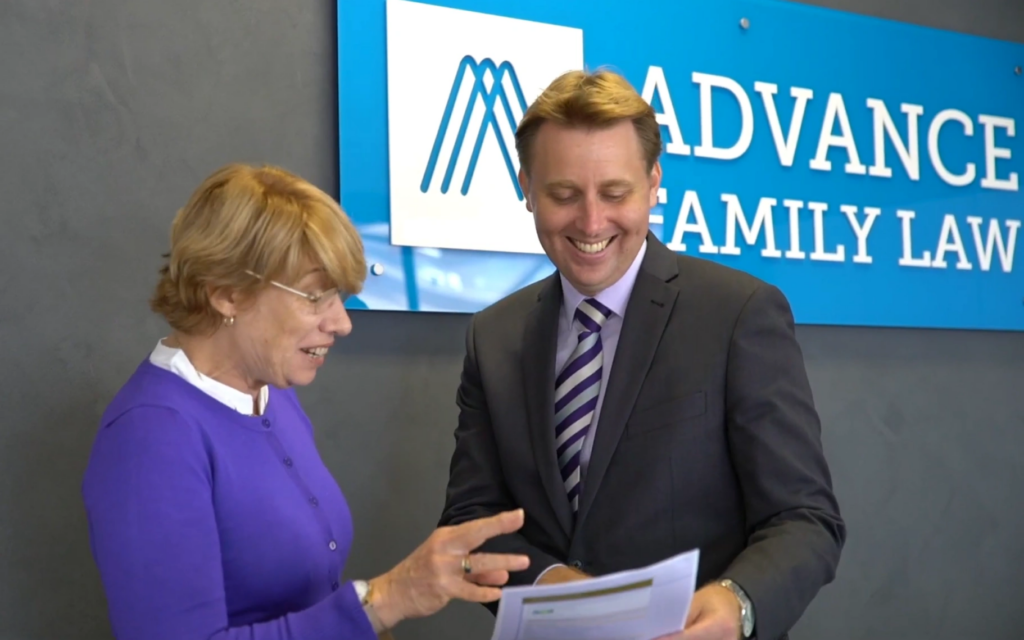
Advance Family Law has been serving the Gold Coast community since 2012, exclusively across divorce and family law matters. Our two Directors, Sonya and Joshua, have over 40 years of combined experience in helping people manage the legal side of separation.
We are a small, dedicated team, based in the relaxed suburb of Biggera Waters, on the northern Gold Coast. If you are travelling to our office by car, it’s an easy drive from Exit 62 from the M1 (Helensvale exit, north or southbound), or via Bayview Street if you are using the Gold Coast Highway.
The nearest bus stop is on Brisbane Road at Centre View Drive, Runaway Bay, approximately 300 metres from our office. Helensvale train station is around 4.1 km away and Gold Coast University Hospital light rail station is approximately 3.3 km away. There is ample on-site and on-street parking available nearby.
At this time, there is no dedicated Federal Circuit and Family Court of Australia on the Gold Coast in the Southport legal precinct. If your matter requires a court attendance, matters will be heard at Brisbane’s registry, or potentially Lismore if you are living on the southern end of the Gold Coast in the Tweed Heads area.
"Divorce affects every part of a person's life, not just the legal side. We try to keep communication simple and honest throughout, so clients always know where things stand."
Sonya Black
Legal fees for divorce in Queensland can vary based on how straightforward your divorce matter is and what services are required. Divorce lawyers on the Gold Coast typically charge between $300 to $600 per hour. For simple matters, many law firms offer fixed fees.
Getting a divorce itself is reasonably simple, and more of an administrative step, which won’t cost more than a few thousand dollars if you have a lawyer manage it for you. Parenting and property matters are usually where legal fees can be more substantial. For a simple divorce, you’ll be required to pay court filing fees which are $1170 as of July 2026, or $390 if you have a concession card or are experiencing financial hardship.
To understand the potential costs specific to your situation, get in touch for a free 15 minute consultation with our team today, who will provide a more accurate estimate based on your circumstances.
In Australia under the Family Law Act, you must be separated for at least 12 months before applying for a divorce in Australia, in line with section 48 of the family Law Act 1975 (Cth).
This period allows the couple involved to consider reconciliation, or divorce, and be sure that the marriage has broken down before filing for divorce. The 12 month separation can be living apart, or under the same roof (or a combination of both).
Separation under one roof requires additional evidence when filing with the court to prove that the nature of the relationship has changed, usually in the way of affidavits or witness statements.
If you have children under 18, you’ll also need to make sure there are sound arrangements in place for their care as part of your divorce application, as set out in section 55A of the Act.
If you apply for a sole divorce application, you’ll need to serve divorce papers on your spouse, to ensure they are aware of the application in progress. Service requirements are set out in Division 2.6.4 of the Federal Circuit and Family Court of Australia (Family Law) Rules 2021.
The application can be served on your spouse or their lawyer, in person, by a professional process server, friend or a family member over 18 years old, or by post, at least 28 days before the hearing. If you are unable to locate your spouse, or if they are making service difficult, you can apply to the Federal Circuit and Family Court of Australia for a different type of service, or to proceed without service taking place, in some circumstances.
You can read more about the process of serving divorce papers here.
Organising a divorce while living under the same roof involves additional steps to demonstrate to the court that you have separated. You’ll need to provide affidavits, from yourself, and potentially friends or family, detailing your living arrangements and how your relationship has changed despite sharing the same residence; such as separate finances, being publicly broken up, living separate lives or no longer being intimate.
Our Gold Coast divorce lawyers can guide you through the legal process and help you gather the necessary evidence to support your divorce application. This ensures that the court proceedings move forward smoothly.
The divorce process in Australia begins with filing a divorce application (which can be a sole or joint application) in the Federal Circuit and Family Court of Australia (FCFCOA), which can happen any time after a period of 12 months separation. The court will review your application, and a hearing date will be set if all requirements are met, usually 4-8 weeks after applying. If there are no disputes and paperwork has been filed correctly, the court will issue a divorce order. In most cases, you won’t need to attend the hearing in person, and will be able to take part via a phone call or video conference.
If your matters are a little more complex you may need to attend, and you can also request to attend if you’d like to be there. If you have children under the age of 18, you’ll need to make sure you have a parenting plan or arrangements in place before applying. Your divorce will be legally ‘official’ one month and one day after a successful divorce hearing takes place.
Beyond getting a divorce, you may need to organise a property settlement, spousal maintenance, as well as parenting arrangements and child support if you have children together. Addressing these matters early can help reduce unnecessary stress and ensure a smoother transition. It’s also important to be aware that many couples finalise their property settlement before getting a divorce, and that can be a good idea, because from the day your divorce order is in effect, you only have one year to file a property settlement claim.
In most cases, your belongings, assets, and debts will need to be divided in line with the Family Law Act 1975 (Cth) guidelines for property settlement. You can find out more about the process here, or by getting in touch with our Gold Coast team of divorce lawyers.
Parenting arrangements should focus on the best interests of the children involved, and what’s practical and workable for the family. If necessary, these arrangements can be made through mutual agreement, mediation services, or family court proceedings.
The most cost-effective way to get a divorce in Queensland (with consideration to parenting, property and divorce itself) can be to apply directly through the CommCourts portal. For related parenting and property matters, aim for an amicable resolution through mediation services or working with lawyers, and avoid court proceedings. You can minimise legal costs and court filing fees by reaching an agreement with your former spouse around asset division and care of children.
Self-representation and FDR are less expensive than hiring a divorce lawyer – however, if your matter is complex, high-conflict or contested, it’s definitely worth speaking to a lawyer about your options, and using one where possible to avoid mistakes and delays and protect your legal position.
The time it takes to get a divorce in Queensland can vary, but typically, it takes about four months from filing the divorce application to the divorce order coming into effect (which is one month and one day after a divorce order is granted). You’ll also need to keep in mind that there is a requirement for a separation period of 12 months before you can apply for a divorce.
While you can apply for a divorce without a lawyer, seeking legal advice from experienced divorce lawyers is highly recommended, especially if there are any complex issues related to property settlements, spousal maintenance or parenting arrangements. Some people apply directly to the court for their divorce, pay the filing fee and don’t use a lawyer at all. A good divorce lawyer is more important when you and your former spouse are having issues reaching agreements around financial and children’s matters.
In Australia, there are no fixed entitlements for a wife or husband in a property settlement after divorce or separation. The Family Law Act 1975 (Cth) considers various factors, including each party’s contributions, current and future needs, to determine a fair division of assets and debts.
Deciding to end a relationship is rarely simple. Signs it may be time to walk away include a loss of trust, ongoing conflict, lack of emotional or physical connection, or feeling unsafe. A trusted counsellor or skilled psychologist may be able to help you weigh up what’s right in your situation. Our guide on ‘When to Call It Quits in a Relationship’ walks you through 19 key questions to help you assess whether you feel your relationship can be repaired or if it’s time to move on.